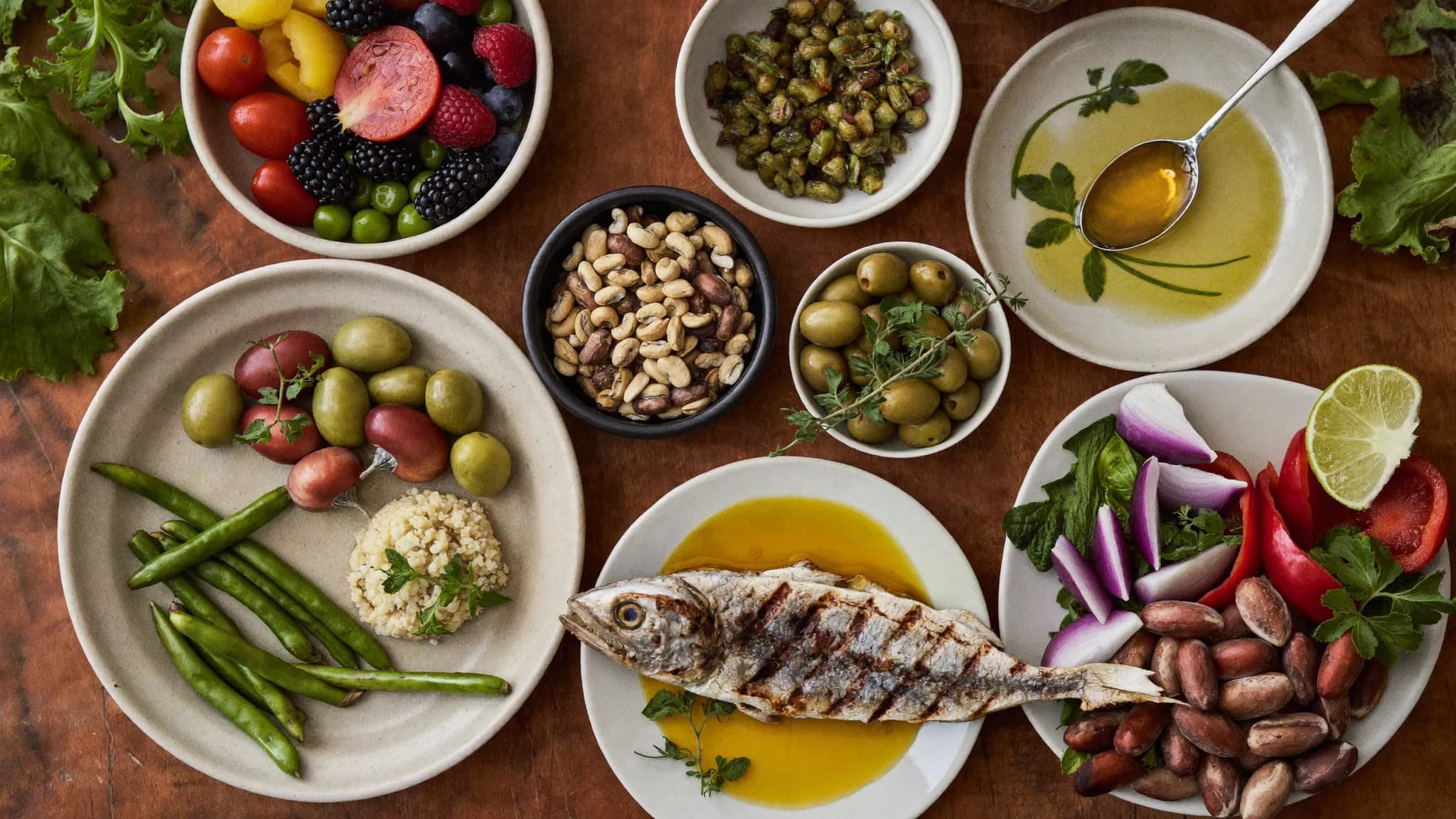
Is there a single "best" menopause diet?
There's no magic menopause diet, but the strongest evidence points clearly to one pattern: a Mediterranean-style diet — rich in vegetables, fruit, whole grains, legumes, fish, nuts, and olive oil, with less red and processed meat. It's repeatedly linked to better heart health (important because cardiovascular risk rises after menopause), healthier weight, and in some studies fewer or milder hot flashes. Think of it as a flexible pattern to shift toward, not a rigid plan to follow perfectly.
What to prioritize
| Focus on | Why it matters in menopause | Good sources |
|---|---|---|
| Protein | Preserves muscle, which declines with age and protects metabolism and bone | Fish, poultry, eggs, beans, lentils, dairy, tofu |
| Calcium + vitamin D | Bone loss speeds up after menopause and fracture risk rises | Dairy, fortified foods, leafy greens; sunlight or a supplement for vitamin D |
| Fiber & whole grains | Help weight, cholesterol, blood sugar, and gut health | Vegetables, fruit, beans, oats, whole grains |
| Healthy fats (incl. omega-3) | Support heart health | Olive oil, nuts, seeds, oily fish like salmon |
| Phytoestrogens (soy) | Modest evidence for easing hot flashes | Soy, edamame, tofu, flaxseed |
What to limit
- Alcohol — a common trigger for hot flashes and night sweats, it also disrupts sleep, adds calories, and raises breast-cancer risk.
- Added sugar and refined carbs — drive weight gain and energy crashes, and make menopause belly fat easier to gain.
- Ultra-processed foods and excess salt — linked to weight gain and higher blood pressure.
- Caffeine — for some women it worsens hot flashes and sleep; notice whether it affects you.
Pulling it together: weight, heart, and bones
The same plate does several jobs at once. A Mediterranean pattern plus enough protein and calcium and vitamin D — paired with strength training — supports a healthier weight, protects your heart, and defends your bones, all of which become priorities after menopause. For symptom-specific eating, supplements are a separate question; see what the supplement evidence actually shows before adding pills.
When to see a clinician or dietitian
Consider professional guidance if you want a bone-health check (such as a DEXA scan) and a tailored plan, if you're managing a condition like diabetes or high cholesterol, or if you'd like help reaching a healthy weight in a sustainable way.